Key Components of a Commercial Energy Storage System Explained
Commercial energy storage is no longer a niche investment. For industrial parks, commercial buildings, manufacturing facilities, and microgrids, it has become a core component of modern energy strategy.Yet many decision-makers still ask a fundamental question:What exactly makes up a commercial energy storage system—and how do these components work together in real-world applications?Understanding the structure of a commercial energy storage system (ESS) is not just a technical matter. It directly affects project reliability, scalability, safety, and long-term return on investment.This article breaks down the essential components of a commercial ESS and explains how they function as an integrated system.
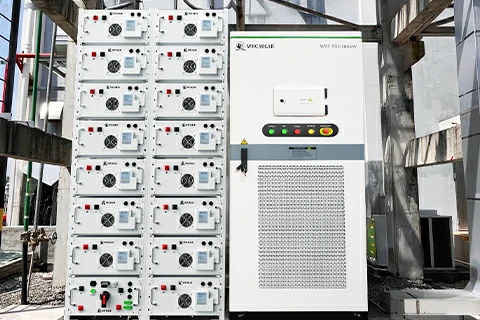
Battery System: The Energy Core
At the heart of every commercial ESS is the battery system, responsible for storing electrical energy and releasing it when needed.Most modern commercial systems rely on lithium-ion battery technology due to its high energy density, long cycle life, and operational efficiency.In commercial applications, battery performance determines:
- How much energy can be shifted during peak-valley pricing
- Backup duration during outages
- Total cycle life across years of operation
- Overall system economics
However, in commercial-scale systems, the battery is never used alone—it operates within a structured cabinet based or rack architecture designed for safety, scalability, and thermal control.
Modular high voltage cabinet designs are increasingly preferred in larger industrial and commercial projects because they reduce current levels, improve efficiency, and simplify expansion.These systems allow businesses to scale capacity according to load growth without redesigning the entire infrastructure.
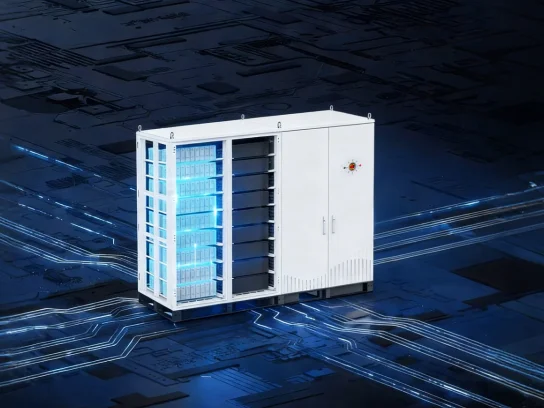
Battery Management System (BMS): Ensuring Safety and Stability
A battery management system (BMS) acts as the safety controller of the ESS. It continuously monitors voltage, temperature, current, and state of charge across battery cells.Its functions include:
- Cell balancing
- Overcharge and over-discharge protection
- Overcharge and over-discharge protection
- Thermal monitoring
Without a properly designed BMS, long-term system stability is compromised.In commercial deployments—where multiple battery cabinets operate in parallel—advanced BMS architecture also supports centralized monitoring and remote diagnostics, which are critical for asset management and operational transparency.
Power Conversion System (PCS): Managing Bidirectional Energy Flow
Commercial energy storage systems interact constantly with the grid and on-site loads. This interaction is handled by the Power Conversion System (PCS).The PCS converts electricity between AC and DC, enabling efficient charging and discharging of batteries.PCS performance influences:
- Round-trip efficiency
- Grid compliance
- Power quality support
- Frequency response capability
For businesses implementing peak shaving or demand charge reduction strategies, PCS efficiency directly impacts financial returns.